Auto Diagnostics in Houston, TX
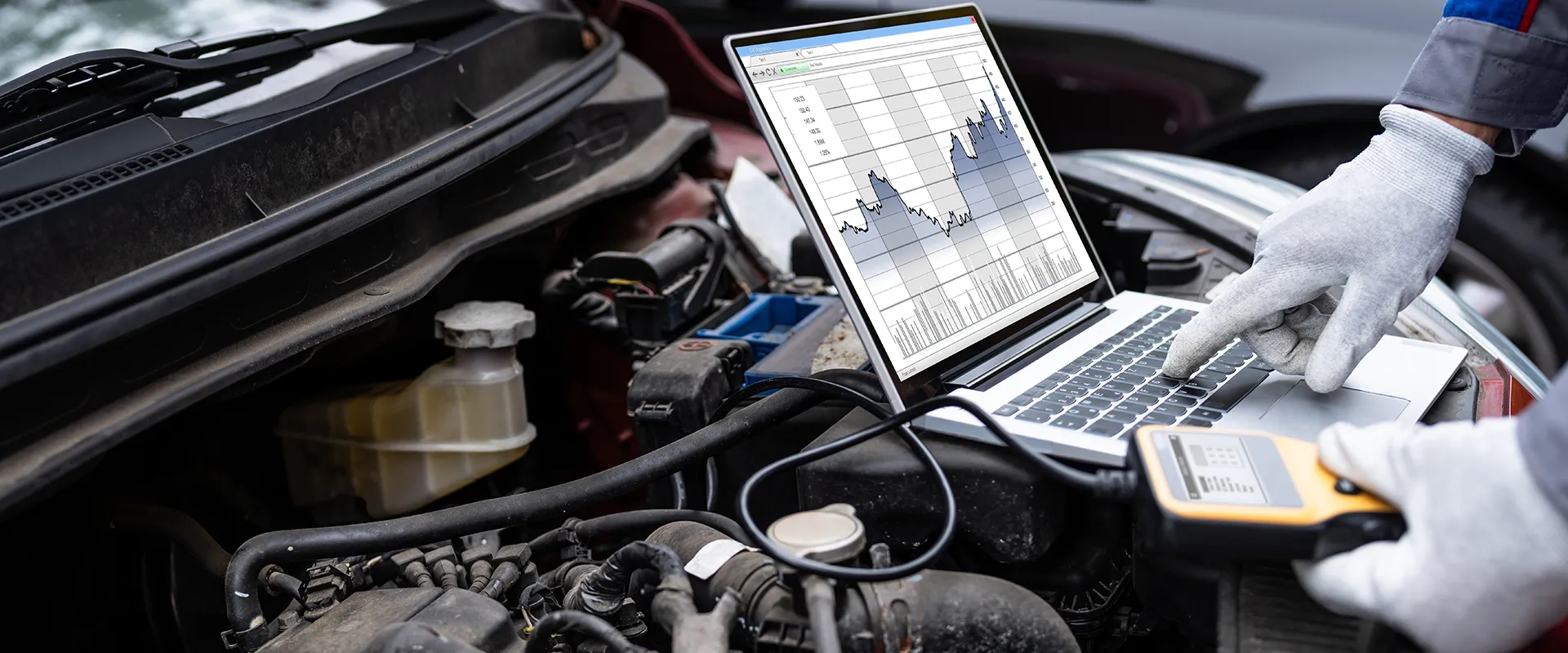
Is your check engine light on? Don’t ignore it, and don’t guess. At West End Auto Works, we provide thorough auto diagnostics in Houston, TX using advanced OBD-II scanning tools to pinpoint exactly what’s wrong with your vehicle before any repair begins.
Whether you’re dealing with rough idling, poor fuel economy, or a warning light you don’t recognize, our certified technicians read your vehicle’s onboard computer and pair that data with hands-on inspection to find the true root cause not just the symptom.
What Does the Check Engine Light Mean?
The check engine light is your vehicle’s way of telling you something needs attention. It could be as minor as a loose gas cap or as serious as a failing catalytic converter or a misfiring engine.
A steady light usually means you should get it checked soon, while a flashing light means you should stop driving immediately a flashing light signals an active misfire that can destroy your catalytic converter in minutes, turning a minor repair into a major one.
Common check engine light triggers include:
- Faulty oxygen sensors or mass airflow sensors
- EVAP evaporative emission leaks
- Worn spark plugs or failing ignition coils
- Transmission control module faults
- Loose or missing gas cap
- Failing catalytic converter
Common Diagnostic Services We Offer
Today’s vehicles are packed with sensors, modules, and onboard computers constantly monitoring performance. Our diagnostic process covers every major system in your vehicle.
Check Engine Light Diagnosis
When your check engine light turns on, our technicians connect to your vehicle’s OBD-II port to retrieve stored fault codes across the engine, emissions, and sensor systems. Those codes point us to the affected system; from there, hands-on inspection confirms the actual root cause before any repair is recommended. We start with a free diagnostic pre-scan so you don’t pay just to see what’s on.
Transmission Diagnostics
Slipping gears, delayed shifting, rough shifts, or a check engine light tied to a transmission code all warrant a transmission diagnostic. We retrieve transmission fault codes, check fluid condition, and evaluate shift performance to identify whether you’re dealing with a solenoid, a sensor fault, fluid failure, or something deeper before recommending any major work. You can learn more about our transmission repair services and how we approach each case accurately.
Battery and Charging System Diagnostics
A weak battery causes hard starts and electrical glitches, but a failing alternator produces nearly identical symptoms. We load-test the battery, measure alternator output under load, and check the starter draw so you know exactly which component is at fault rather than replacing parts on a guess.
Fuel System Diagnostics
Hesitation, misfires, poor fuel economy, or a rough idle often trace back to the fuel system injectors, the fuel pump, fuel pressure, or related sensors. Our diagnostics evaluate the full fuel system to isolate where the problem originates, since the same symptom can come from several different points of failure.
Electrical System Diagnostics
Modern vehicles rely on a network of modules and sensors managing everything from fuel delivery to safety systems. Flickering lights, non-functional accessories, modules throwing codes, or a check engine light tied to a sensor fault all point here. We use advanced scanning tools that communicate with every module in your vehicle not just the powertrain to trace electrical faults to their actual source. You can learn more about our electrical repair services.
Brake and ABS Diagnostics
An ABS warning light, a pulsing pedal, or a brake system fault code means your anti-lock system or hydraulic braking isn’t functioning as designed. We retrieve ABS fault codes, test sensor operation, and inspect the hydraulic system to identify what’s failing and what’s safe. You can learn more about our brake repair services.
Emissions System Diagnostics
Exhaust and emissions faults failing oxygen sensors, EVAP leaks, EGR faults, catalytfic converter efficiency codes are among the most common check engine light triggers. We diagnose the full emissions system, which also matters in Harris County where most vehicles still need to pass an emissions test to renew registration.
SRS and Airbag System Checks
An airbag warning light means a fault has been detected in your supplemental restraint system, and the airbags may not deploy correctly in a collision. We retrieve SRS fault codes and identify what’s causing the light whether it’s a sensor, a clock spring, a module, or something else before it becomes a safety issue on the road.
Our Auto Diagnostic Process
When you bring your vehicle to West End Auto Works, here’s exactly what happens:
Step 1: Free Diagnostic Pre-Scan
We connect to your vehicle’s OBD-II port and retrieve all stored fault codes across every module at no charge. This tells us which systems are flagging issues and prevents you from paying just to see what’s on before any diagnosis begins.
Step 2: Symptom Review
Your input matters. We ask about what you’ve noticed sounds, smells, when it happens, how long it’s been going on — because intermittent problems and driver observations often point us directly to the cause faster than codes alone.
Step 3: Hands-On Diagnosis
Fault codes identify the affected system; they don’t always name the failed part. Our technicians perform the hands-on testing — live sensor data, voltage testing, physical inspection — that confirms the actual root cause rather than just clearing the code and swapping the part it names.
Step 4: Digital Vehicle Inspection Report
After diagnosis, we send you a Digital Vehicle Inspection (DVI) report with photos showing exactly what we found. You see the evidence, not just a description. Anything urgent is flagged clearly; anything that can wait is noted so you can plan.
Step 5: Written Estimate and Approval
We explain what the fault codes mean in plain language, walk you through the recommended repair, and give you a clear, upfront estimate before anything moves forward. Nothing paid starts without your written approval — no surprises, no pressure.
Step 6: Repair and Final Testing
Once you’ve approved the work, our technicians handle the repair in-house using quality parts. After the repair, we re-scan to confirm the codes are resolved, clear any stored faults, and road-test the vehicle to verify everything is working correctly before you pick it up.
Why Accurate Diagnostics Save You Money
Skipping proper diagnosis and replacing parts based on a code alone is one of the most expensive mistakes a driver can make.
The same code can be triggered by several different failures a P0420 catalytic converter code, for example, can actually come from an oxygen sensor, an exhaust leak, or a real converter failure.
Replacing the converter when the sensor is at fault wastes hundreds of dollars and leaves the light right where it was.
Regular diagnostic checks also catch problems before they compound. A misfiring cylinder caught early is a spark plug or coil job; left alone it ruins the catalytic converter. An EVAP leak caught in diagnostics is a cheap fix; ignored, it becomes an emissions test failure and a bigger repair.
The pattern holds across every system early detection consistently costs less than reactive repair.
Benefits of timely auto diagnostics:
- Accurate repairs the first time — fix the right thing, not the thing named in the code
- Cost control — catch minor faults before they damage adjacent components
- Emissions readiness — keep your vehicle ready to pass Harris County emissions testing
- Safety — ABS, airbag, and brake faults found early, not after an incident
- Performance — sensor and fuel system issues fixed before they quietly hurt fuel economy
Why West Houston Drivers Choose West End Auto Works for Diagnostics
We’re a local West Houston shop, not a chain. Our technicians use advanced diagnostic equipment that communicates with every module in your vehicle engine, transmission, ABS, airbag, suspension, and body systems not just the powertrain codes a basic scanner reads.
That depth of access means faster, more accurate diagnosis, especially on intermittent faults and complex multi-system issues.
You’ll always get the diagnostic findings explained in plain language, a DVI report with photos, and a written estimate before any paid work begins. We don’t recommend repairs you don’t need, and we don’t replace parts on a guess.
Auto Diagnostics – Frequently Asked Questions (FAQs)
Q: Is a car diagnostic really free?
Our free diagnostic pre-scan reads the stored fault codes so you don’t pay just to see what lights are on. A deeper diagnosis — the hands-on testing that isolates why a code is setting may carry a fee, which we explain upfront.
The distinction matters: a free code read points to a system, while true diagnosis pinpoints the actual failed component so you’re not replacing parts on a guess.
Q: Why does an auto parts store code read differ from a shop diagnostic?
A parts-store scan reads the code; a shop diagnostic finds the root cause. The same code can be triggered by several different failures, and replacing the part named in the code often doesn’t fix the problem. Diagnosis pairs code data with live sensor readings and physical inspection to confirm what’s actually wrong before you spend money on parts.
Q: Can I drive with my check engine light on?
A steady check engine light usually means you can drive short-term but should get it checked soon, while a flashing light means stop driving as soon as it’s safe.
A flashing light signals an active engine misfire that can destroy your catalytic converter within minutes — turning a minor repair into a very expensive one. A quick scan tells you which situation you’re in.
Q: Why does my check engine light keep coming back after I clear it?
Clearing the code doesn’t fix the underlying fault, so the light returns once the computer re-detects the problem. Disconnecting the battery or using a scanner to erase the code only resets the memory, the failing sensor, leak, or component is still there.
The light staying off for good requires repairing the actual cause, which is what a proper diagnosis identifies.
Q: How long does a car diagnostic take?
A basic scan takes a few minutes, while a full diagnosis of an intermittent or complex fault can take an hour or more.
Simple, clearly-coded problems resolve quickly; hard-to-reproduce issues an occasional stall, a parasitic drain, a wiring fault take longer because the problem has to be recreated and traced. You’ll get a timeline before work begins.
Make an Appointment for Auto Diagnostics in Houston
When your check engine light comes on, you want a shop that finds the real problem rather than just clearing the code.
For trusted auto diagnostics near me in Houston, TX, West End Auto Works combines certified technicians, advanced OBD-II equipment, and a free diagnostic pre-scan that saves you money on guesswork repairs. Whether it’s a quick scan or a complex intermittent issue that’s been stumping other shops, our team is ready to help.
Make an appointment today in Houston, TX and get a clear answer before you spend a dollar on parts.