
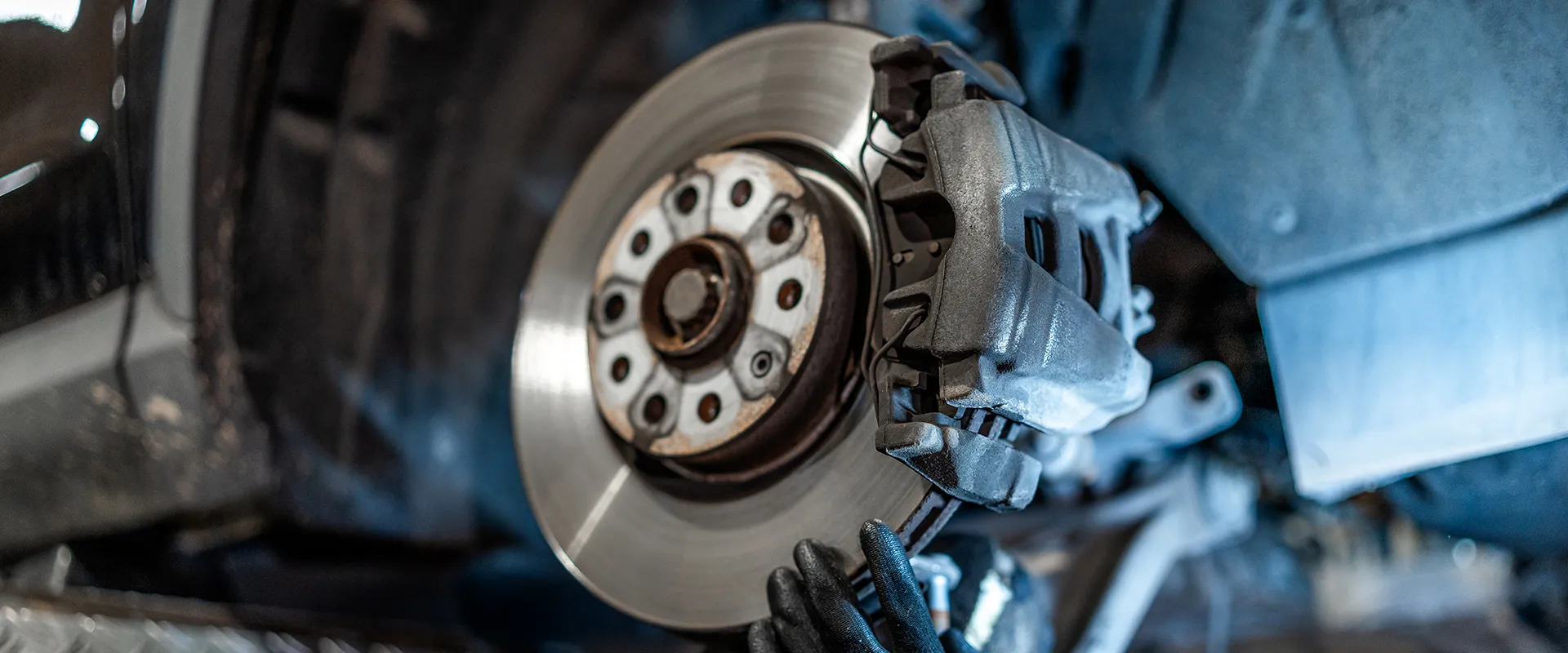
Brake Repair in Houston, TX
Your brakes are the most important safety system on your vehicle, and Houston’s stop-and-go traffic puts them to the test every single day.
At West End Auto Works, we provide professional brake repair in Houston, TX for all makes and models from quick pad replacements to complete brake system overhauls.
We start with a free diagnostic pre-scan and inspection so we know exactly what’s happening before recommending any work. If something feels off, the safest move is to get it checked before a small issue becomes a serious safety problem.
Warning Signs You Need Brake Repair
Your vehicle usually tells you when brakes need attention. Ignoring the warning signs almost always makes the repair more expensive.
- Squealing or squeaking – when braking worn pad indicators telling you it’s time
- Grinding noise – metal-on-metal contact; pads are gone and rotors are being damaged
- Vibration or pulsing pedal – warped rotors from heat or uneven wear
- Car pulling to one side – when braking stuck caliper or uneven pad wear
- Soft or spongy pedal – air in the lines or a brake fluid leak
- Brake warning light – on the dashboard should never be ignored
- Longer stopping distances – reduced braking performance across the system
Brake Services at West End Auto Works
Brake Pad Replacement
Brake pads are the most frequently replaced brake component, and we stock quality pads for every vehicle type and budget.
Worn pads left too long score the rotors, turning a straightforward pad job into a more expensive pad-and-rotor replacement. Catching pad wear early keeps the cost low.
Rotor Resurfacing and Replacement
Rotors can sometimes be resurfaced to remove scoring and restore a smooth braking surface, but only when they’re within the manufacturer’s minimum thickness spec.
When rotors are too thin, warped, or deeply grooved, replacement is the right call. We measure before recommending you’ll never be told to replace rotors that don’t need it.
Brake Caliper Repair and Replacement
Calipers apply pressure to the pads against the rotors. A stuck or seized caliper causes the brake to drag on that corner wearing that pad much faster than the others, causing pulling, heat buildup, and uneven rotor wear.
We diagnose, rebuild, or replace calipers and always inspect slide pin condition during brake service.
ABS System Diagnostics and Repair
An ABS warning light means a fault in your anti-lock braking system, and the ABS may not function in an emergency stop. We retrieve ABS fault codes, test wheel speed sensors, and inspect the hydraulic control unit to find exactly what’s failing and get it working correctly.
Brake Line Inspection and Repair
Brake lines carry hydraulic fluid under pressure to the calipers and wheel cylinders. Corrosion, physical damage, or a developing leak can cause a sudden loss of brake pressure. We inspect lines and hoses during every brake service and repair leaks before they become failures.
Brake Fluid Flush and Replacement
Brake fluid absorbs moisture over time, lowering its boiling point and reducing stopping power — a serious issue during heavy braking on Houston highways and bridges.
We recommend a brake fluid flush every two years or per your manufacturer’s schedule. Houston’s humidity accelerates moisture contamination, making this service more important here than in drier climates.
Emergency Brake Adjustment
A parking brake that doesn’t hold is a safety and liability issue. We inspect and adjust the emergency brake to confirm it holds reliably on an incline — often overlooked until it’s needed.
Full Brake System Inspections
During every brake service, we perform a complete system inspection: pad thickness and wear pattern, rotor condition, caliper and slide pin function, fluid level and moisture contamination, brake line and hose condition, and ABS sensor operation.
You receive a Digital Vehicle Inspection (DVI) report with photos showing exactly what we found.
Why Brake Inspections Save You Money
Routine inspections catch wear early before it damages more expensive components. A worn pad left too long scores the rotor, turning a pad job into a pad-and-rotor replacement at two to three times the cost.
Catching it at the squealing stage rather than the grinding stage is the difference between a minor service and a significant repair. Our technicians tell you what’s urgent, what can wait, and why — so you can make an informed decision without pressure.
Houston Driving and Brake Wear
Stop-and-go traffic on I-10, the Beltway, and 610 means your brakes are working constantly. The heat from repeated braking warps rotors faster than in cooler climates, and Houston’s heavy rainfall and standing water accelerate rust on rotors and brake hardware.
Because of these conditions, many Houston drivers find their brakes wear significantly faster than the manufacturer’s estimates.
That’s why proactive inspections matter more here — catching wear early lets us replace just the pads instead of pads, rotors, and calipers together.
Why West Houston Drivers Trust West End Auto Works for Brakes
We fix what actually needs fixing. If your pads have life left or your rotors don’t need replacing, we tell you. If everything needs to be done, we walk you through your options, including quality pads at different price points, with a clear written estimate before any work begins.
No upsells, no pressure — just an honest inspection and a DVI report with photos so you can see what we see.
Brake Repair in Houston, TX -Frequently Asked Questions (FAQs)
Q: How much does a brake job cost in Houston?
A pads-only job per axle is the lower end; pads plus rotors runs higher; adding calipers or a brake fluid flush increases it further. The biggest cost variable is rotor condition worn pads left too long score the rotors and force a bigger job. Front and rear axles are priced separately, and you get an itemized written estimate before any work starts.
Q: How long do brake pads last in Houston stop-and-go traffic?
Many drivers get 30,000–50,000 miles, but heavy city driving on I-10, the Beltway, and 610 wears pads faster than highway use. Rather than guessing by mileage, have pad thickness checked at each oil change – it’s the most accurate way to know where you stand before wear reaches the rotors.
Q: Do I have to replace rotors when I replace brake pads?
Not always. Rotors can be reused if they’re above minimum thickness spec and not warped or deeply scored. If they’re within spec and smooth, new pads alone are the right call. Installing new pads on damaged rotors causes noise, vibration, and rapid pad wear – so we measure before recommending either way.
Q: Why are my brakes squealing or grinding?
Squealing usually means the pads have reached their wear indicator a built-in warning. Grinding means the pads are gone and metal is contacting the rotor, actively damaging it and raising the repair cost every mile you drive. Squealing is an early warning; grinding is a late one. Either warrants an inspection, and grinding especially shouldn’t wait.
Q: How often should brake fluid be flushed?
Every two years for most vehicles, or per your manufacturer’s schedule. Brake fluid absorbs moisture that lowers its boiling point and softens the pedal under hard braking a real concern on Houston highways. Houston’s humidity speeds moisture absorption, making this service more important here than in drier climates.
Q: Is it safe to drive with grinding brakes?
No. Grinding means metal-on-metal contact, stopping distances lengthen, and rotor damage grows every mile. It’s both a safety issue and a rapidly rising repair bill, since rotors and sometimes calipers get destroyed alongside the pads. If your brakes are grinding, get in immediately.
Make an Appointment for Brake Repair in Houston
Don’t take chances with your brakes. For trusted brake repair near me in Houston, TX, West End Auto Works delivers honest assessments, quality parts, and repairs done right the first time.
Make an appointment today in Houston, TX, if something feels off and you want it checked before it gets worse.