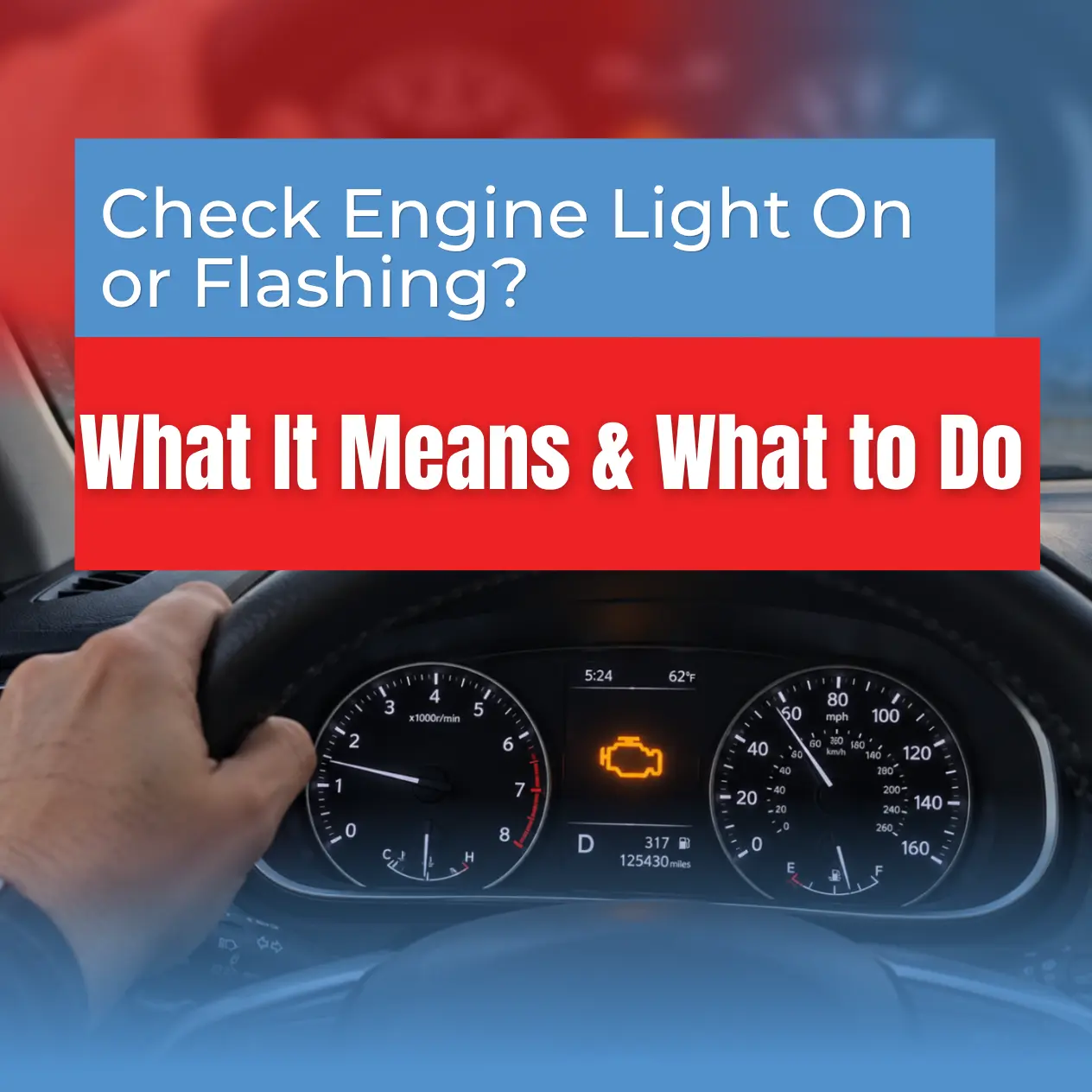
Check Engine Light On or Flashing? What It Means and What to Do
Few dashboard warnings cause as much second-guessing as the check engine light. It can mean something as small as a loose gas cap or as serious as a failing catalytic converter, and the light itself looks the same either way.
The one thing that tells you how urgent it is comes down to whether the light is steady or flashing. Here is what each one means, what usually triggers it, and what you should do next.
Steady light versus flashing light: the difference that matters
A steady check engine light means your car’s computer has logged a fault and wants it looked at, but the problem is not an immediate emergency. You can usually keep driving in the short term while you arrange to have it diagnosed.
A flashing check engine light is different. It almost always signals an active engine misfire, which means unburned fuel is passing into the exhaust and can overheat and damage the catalytic converter, one of the most expensive parts on the car to replace. A flashing light is a reason to stop driving as soon as it is safe to do so and get the car looked at right away.
What can trigger a check engine light
The light is tied to your car’s onboard diagnostics system, which watches dozens of sensors. When one reads outside its normal range, the computer stores a trouble code and turns on the light. The most common causes are:
- A loose or failing gas cap. This is the single most common trigger. A loose cap breaks the seal on the fuel system and sets off the light. Tighten it, and if the light is still on after a day or two of driving, the cap may need replacing.
- A failing oxygen sensor. This sensor measures unburned oxygen in the exhaust. A bad one hurts fuel economy and, left alone, can damage the catalytic converter.
- A bad catalytic converter. Often the result of another problem left unaddressed. Replacement is costly, which is why the earlier issues are worth catching.
- A dirty or failed mass airflow sensor. It measures incoming air to set the fuel mix. A faulty one causes rough running and stalling.
- Worn spark plugs or ignition coils. These cause misfires, and a misfire is often what makes the light flash.
- An EVAP system leak. The system that captures fuel vapor can develop small leaks that trip the light.
What to do when the light comes on and stays steady
- Check that your gas cap is tight. Remove it and reseat it until it clicks.
- Notice how the car is running. If it drives normally, you have time to schedule a diagnostic.
- Watch for changes: rough idling, loss of power, odd smells, or the light starting to flash. Any of these means get it checked sooner.
- Book a proper diagnostic. A scan reads the code, but the code points to a system, not always the exact failed part, which is where a technician’s inspection comes in.
What to do if the light is flashing
Ease off the accelerator, avoid hard acceleration, and drive to a safe stop. A flashing light means an active misfire that can damage the catalytic converter within minutes of hard driving. Do not keep driving to run errands. Get the car to a shop, or have it towed if you are far from one.
Can you still drive with the check engine light on?
With a steady light and a car that runs normally, yes, for a short time while you arrange service. With a flashing light, or if the car is running rough or losing power, no. Driving on an unresolved fault can turn a small repair into a large one, and in Texas it can also cost you at inspection time.
A check engine light and your Harris County inspection
If you live in or around Houston, this matters. Harris County requires an emissions inspection for most gas vehicles, and that test includes a check of the onboard diagnostics system. An illuminated check engine light will cause the emissions portion to fail, no matter how well the car seems to drive. If your inspection is coming up, an active light needs to be resolved first, not after.
Why a code reader is only the start
A plug-in scanner will read the stored trouble code, and that is useful information. But a code like “P0420” tells you the catalytic converter system is running below its threshold; it does not tell you whether the converter itself failed, or whether an oxygen sensor or an upstream misfire caused it. Replacing the wrong part is how people spend money twice. A proper diagnostic traces the code to the actual cause.
Get it checked in Houston
If your check engine light is on, or flashing, the team at West End Auto Works can read the code and, more importantly, find what is actually causing it. We handle the full diagnosis and repair in one place, so you are not guessing.
Call us at (281) 879-9999 or stop by 13505 Alief Clodine Rd, Houston, TX 77082 to book a diagnosis.