Cooling System Repair in Houston, TX
In Houston’s extreme heat, your vehicle’s cooling system isn’t just important – it’s critical. An overheating engine can cause catastrophic damage in minutes, warping cylinder heads and blowing head gaskets before you even reach the next exit.
At West End Auto Works, we provide professional cooling system repair in Houston, TX for all makes and models, keeping your engine running at a safe temperature no matter how hot it gets outside. We start with a free diagnostic pre-scan so you’re not paying to guess at parts before we know exactly what’s failing.
Warning Signs of a Cooling System Problem
Catching cooling system problems early saves you from a far more expensive engine repair. Watch for:
- Temperature gauge climbing toward the red zone
- Steam or smoke rising from under the hood
- Sweet smell indicating a coolant leak
- Puddle of green, orange, or pink fluid under a parked vehicle
- Low coolant warning light on the dashboard
- Heater that won’t blow warm air — heat comes from the same coolant circuit
- Overheating at idle or in stop-and-go Houston traffic
If you notice any of these, pull over safely and shut the engine off. Driving an overheating vehicle risks warped cylinder heads and blown head gaskets that turn a minor repair into a major one.
How Your Cooling System Works
Your cooling system circulates coolant through the engine to absorb heat, then passes it through the radiator where airflow cools it before it cycles back.
Key components work together to make that happen: the radiator dissipates heat, the water pump keeps coolant moving, the thermostat regulates flow based on engine temperature, and the radiator hoses, cap, and overflow reservoir keep everything sealed and properly pressurized.
The heater core borrows that same coolant heat to warm your cabin. When any one component fails, the entire system is compromised – which is why accurate diagnosis matters before any parts get replaced.
Cooling System Services at West End Auto Works
Coolant Leak Diagnosis and Repair
Coolant leaks at hoses, gaskets, the radiator, or water pump seals are among the most common cooling system problems. We pressure-test the system to locate leaks that aren’t visually obvious, then repair the source rather than just topping off the fluid.
Radiator Repair and Replacement
A clogged or corroded radiator can’t dissipate heat efficiently, leading to overheating even when coolant levels are fine. We flush, clean, and inspect the radiator and replace it when flushing won’t restore adequate flow.
Water Pump Replacement
The water pump is what moves coolant through the system, and a failing pump with worn impeller vanes or damaged bearings is a common cause of overheating. Because the water pump is often replaced at the same time as the timing belt, we coordinate this inspection during timing belt service to save labor.
Thermostat Replacement
A thermostat stuck open causes the engine to run too cool and the heater to blow cold air; stuck closed causes rapid overheating. Both conditions cause problems. Thermostat replacement is one of the more affordable cooling system repairs and one of the most commonly overlooked causes of temperature issues.
Coolant Flush and Replacement
Old coolant loses its corrosion inhibitors and allows scale deposits to form in the radiator, heater core, and water jacket. We flush the system completely and refill with the correct OEM-spec coolant for your vehicle, the right type and concentration matter, especially in Houston’s heat. We recommend a flush every 30,000 miles or per your manufacturer’s schedule.
Heater Core Diagnostics and Repair
The heater core is a small radiator inside the dashboard that uses coolant heat to warm the cabin. A leaking heater core produces a sweet smell inside, fogs the windshield, and leaves wet carpet on the passenger floor. Left unchecked, it causes coolant loss and overheating. Because heater core replacement is a labor-intensive job, proper diagnosis first confirms it’s the source before any dashboard work begins.
Head Gasket Diagnosis and Repair
Prolonged overheating is the primary cause of blown head gaskets. Symptoms include white exhaust smoke, coolant loss without visible external leaks, bubbles in the coolant reservoir, or milky oil. We diagnose head gasket failure definitively before recommending repair, since the symptoms overlap with other issues and a misdiagnosis leads to expensive unnecessary work.
Hose and Radiator Cap Inspection
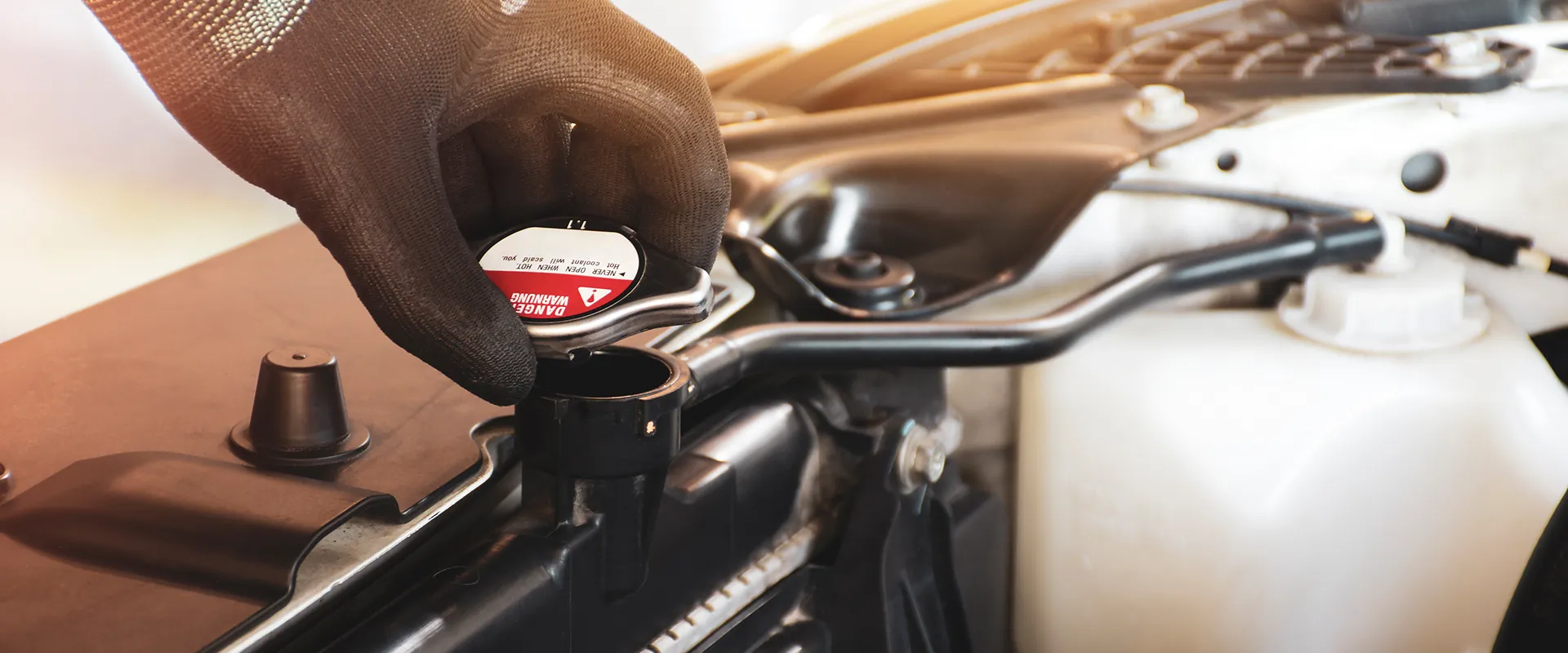
Hoses that are cracked, swollen, or soft can burst under pressure, causing sudden coolant loss and immediate overheating. We inspect every hose during cooling system service and at every oil change, and test the radiator cap for correct pressure rating, since a weak cap causes the system to boil over at lower temperatures.
Preventive Cooling System Maintenance
Preventive maintenance is always less expensive than an emergency repair on the shoulder of a hot Houston highway. Our recommendations:
- Coolant flush every 30,000 miles or per manufacturer’s schedule
- Hose inspection at every oil change for cracks, swelling, or softness
- Radiator cap pressure test to confirm the system holds correct pressure
- Water pump inspection during timing belt service
- Coolant concentration check — especially important in Houston’s heat
Houston Heat and Your Cooling System
Houston’s combination of extreme ambient temperatures, stop-and-go traffic, and humidity makes cooling system maintenance more critical here than almost anywhere else in the country.
At highway speed, airflow through the radiator does much of the cooling work; in slow traffic, the system relies entirely on the radiator fan and coolant circulation, so a marginally functioning component that copes on the highway fails in city traffic.
Houston’s heat also accelerates coolant breakdown and hose degradation faster than in milder climates, making the inspection intervals that matter elsewhere non-negotiable here.
Why West Houston Drivers Choose West End Auto Works
We diagnose before we repair. Because overheating can stem from several different sources a thermostat, a water pump, a hose, a head gasket, or the radiator itself, guessing at parts costs you money and leaves the real problem unsolved.
Our free diagnostic pre-scan and hands-on cooling system inspection identify the actual cause, we send a DVI report with photos showing what we found, and you get a written estimate before any work begins.
Frequently Asked Questions – Cooling System Repair in Houston, TX
Q: Why does my car overheat in Houston traffic but not on the highway?
At highway speed, airflow through the radiator helps cooling; in stop-and-go traffic the system relies on the radiator fan and coolant circulation. A failing fan, weak water pump, or marginal thermostat that copes at highway speed fails when the engine sits at idle in slow traffic. Houston’s ambient heat leaves almost no margin, so problems that might go unnoticed elsewhere show up here.
Q: Can I drive my car if it’s overheating?
No, continuing to drive an overheating engine risks warped cylinder heads and a blown head gasket, turning a relatively minor repair into a major one. If the temperature gauge climbs toward the red or you see steam, pull over safely and shut the engine off. A cheap thermostat or hose caught early is far less costly than the engine damage that comes from pushing on.
Q: How often should I flush my coolant?
Every 30,000 miles or per your manufacturer’s schedule. Coolant loses its corrosion protection over time, allowing deposits to form in the radiator and heater core. In Houston’s heat the system works harder, so keeping fresh coolant and the correct concentration matters more here than in milder climates.
Q: Why is there a sweet smell coming from my car?
A sweet, syrupy smell usually means a coolant leak often from a hose, the radiator, the water pump, or the heater core. If the smell is strongest inside the cabin or you see fog on the windshield, the heater core may be leaking into the HVAC system. Coolant leaks reduce cooling capacity and lead to overheating, so finding the source early keeps the repair small.
Q: What’s the difference between coolant and antifreeze?
They’re the same fluid antifreeze is the concentrate, and coolant typically refers to it mixed with water (usually 50/50). Despite the winter-sounding name, it matters just as much in summer: it raises the boiling point and carries heat away from the engine. Using the correct OEM-spec type and mix ratio is important, since the wrong coolant can cause corrosion or gel in some systems.
Make an Appointment for Cooling System Repair in Houston
When your engine is running hot, you don’t have time to guess. For trusted cooling system repair near me in Houston, TX, West End Auto Works delivers thorough diagnostics, quality parts, and honest service built for Houston’s demanding conditions. Make an appointment today in Houston, TX, if your temperature gauge is climbing right now