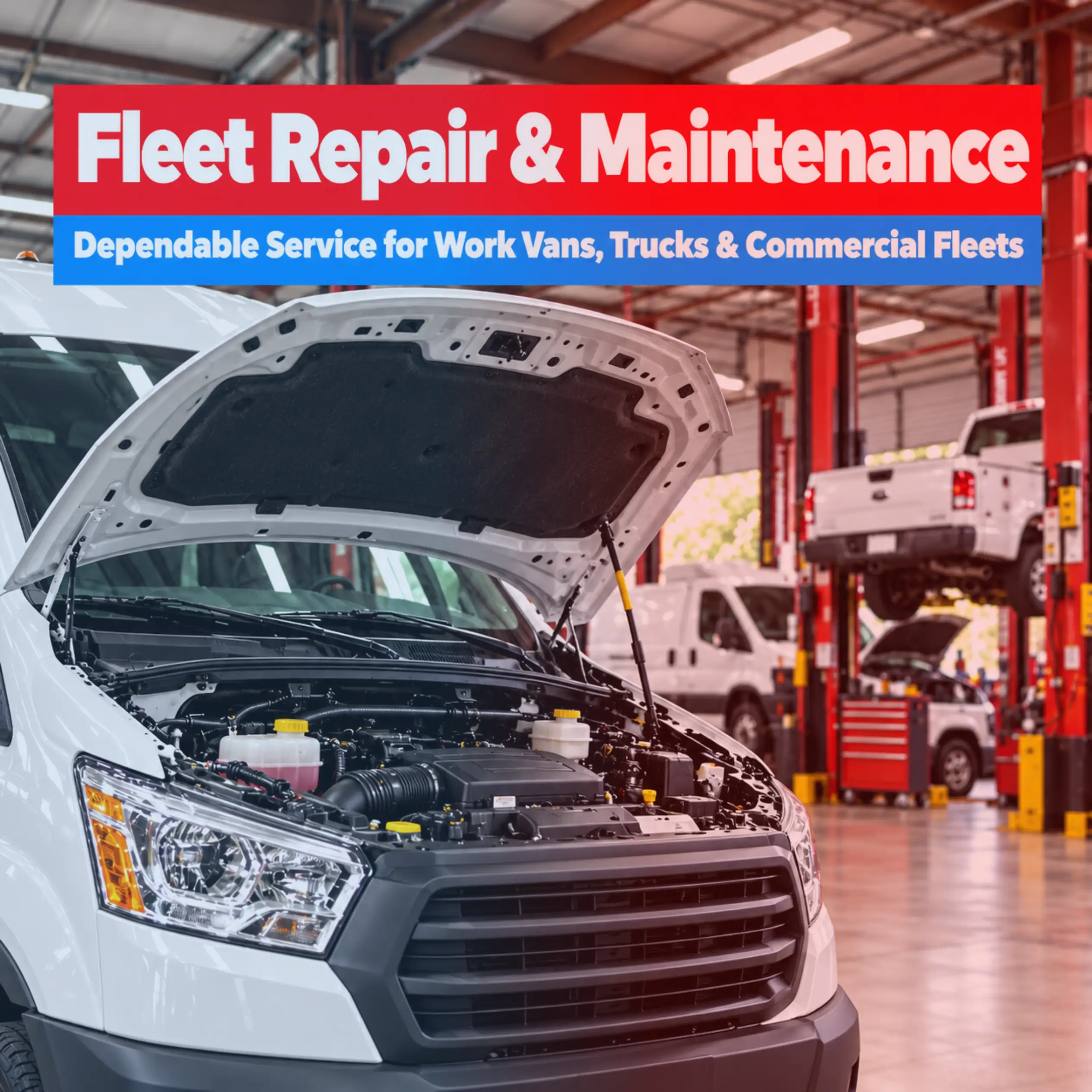
When a work van or truck breaks down, the repair bill is only part of the cost. Your business may also lose a scheduled job, technician time, customer trust, and revenue.
A fleet maintenance schedule helps you choose when vehicles come off the road for service instead of waiting for a breakdown to decide for you. It will not prevent every repair, but it can make maintenance more predictable and help you catch small problems earlier.
Your vehicle manufacturer’s maintenance schedule should always be the starting point. Then adjust the plan for how each vehicle is actually used.
What should a fleet maintenance plan include?
A useful plan has three layers:
- Daily or pre-trip checks
- Routine service and inspections
- Manufacturer-scheduled maintenance
The schedule should also account for engine hours, towing, heavy loads, frequent idling, short trips, and Houston’s heat and stop-and-go traffic.
Start with a vehicle list
Create a record for every vehicle in the fleet. Include:
- Year, make, and model
- Vehicle identification number
- Current mileage
- Engine hours, if available
- Primary driver or department
- Usual type of work
- Towing or load requirements
- Date of the last service
- Next recommended service
A delivery van that spends all day in traffic may need a different maintenance plan from a pickup that drives mostly on the highway. Treating every vehicle exactly the same can lead to over-servicing some vehicles and missing problems on others.
Use the manufacturer’s schedule first
Start with the owner’s manual or factory maintenance schedule for each vehicle. Record the recommended intervals for:
- Engine oil and filters
- Brake inspections
- Tire rotation and replacement
- Transmission service
- Differential or transfer-case service
- Coolant service
- Spark plugs
- Belts and hoses
- Battery testing
- Air and fuel filters
Vehicles used for towing, hauling, frequent idling, short trips, or severe stop-and-go driving may fall under the manufacturer’s severe-service recommendations.
Do not use a generic mileage interval as a replacement for the vehicle manufacturer’s instructions.
Build a simple fleet maintenance checklist
A practical checklist can look like this:
| Frequency | What to check |
|---|---|
| Before driving | Warning lights, tire condition, fluid leaks, lights, mirrors, and visible damage |
| Weekly | Tire pressure, tread wear, fluid levels, windshield condition, and unusual noises |
| During scheduled service | Brakes, battery, belts, hoses, filters, suspension, steering, and fluid condition |
| At manufacturer intervals | Oil, transmission, differential, coolant, spark plugs, timing components, and other scheduled items |
| After a pothole, flood, or heavy load | Alignment, tires, underbody, brakes, drivetrain, and fluid contamination |
The exact interval depends on the vehicle and its use. The purpose of the checklist is to make sure someone is responsible for checking each item.
Track engine hours and idling
Mileage does not tell the whole story for a commercial vehicle.
A work van that idles at job sites with the air conditioning running may accumulate significant engine wear without adding many miles. Track engine hours when the vehicle provides that information, and pay attention to:
- Long periods of idling
- Frequent short trips
- Repeated stop-and-go driving
- Towing or carrying heavy equipment
- Dusty or dirty work environments
- Trailer use
- Flooded roads or standing water
These conditions may affect oil, cooling systems, brakes, batteries, transmissions, and differentials.
Give drivers an easy way to report problems
Drivers often notice problems before a maintenance manager does. Make it easy for them to report:
- New warning lights
- Brake noise or vibration
- Steering that feels loose
- Pulling to one side
- New fluid spots
- Overheating
- Hard starting
- Transmission slipping
- Unusual tire wear
- New noises or smells
A simple text message, online form, or shared maintenance log can work. The important thing is that drivers know what to report and who will review it.
Keep service records by vehicle
Every vehicle should have its own maintenance history. Record:
- Date and mileage
- Work performed
- Parts replaced
- Inspection photos
- Technician recommendations
- Deferred repairs
- Warranty information
- Next service due
Good records help you identify vehicles that are becoming expensive to maintain. They also make it easier to approve repairs, plan downtime, and decide when replacement may be more practical than continued repair.
Know when a vehicle needs attention immediately
Do not wait for the next scheduled service if a vehicle has:
- A flashing check-engine light
- An overheating temperature gauge
- A brake warning light
- A soft or unusually hard brake pedal
- A damaged tire or sidewall bulge
- A major fluid leak
- Loss of steering control
- Grinding from the brakes or drivetrain
- A strong fuel or burning smell
- A transmission that will not hold a gear
A vehicle with a serious safety or drivability problem should be removed from service until it has been inspected.
Why Houston conditions matter
Houston work vehicles deal with heat, humidity, traffic, potholes, sudden rain, and frequent air-conditioning use. These conditions can place additional stress on:
- Cooling systems
- Batteries
- Air-conditioning components
- Brakes
- Tires
- Transmissions
- Belts and hoses
Vehicles that drive through standing water should also be checked for underbody, electrical, brake, and drivetrain concerns.
What to look for in a fleet repair partner
Whether you operate one work van or a larger fleet, look for a repair partner who can provide:
- One point of contact
- Clear repair approvals
- Per-vehicle service records
- Digital inspection photos
- Priority scheduling when possible
- Consolidated invoicing
- Service for the makes and models in your fleet
- A written warranty on qualifying repairs
The goal is not to repair every vehicle immediately. The goal is to understand what needs attention now, what can wait, and how to keep vehicles available for work.
What Is Fleet Service?
Fleet service is the maintenance, inspection, diagnosis, and repair of vehicles used by a business. It covers work vans, service trucks, delivery vehicles, company cars, and other commercial vehicles.
Fleet service can include:
- Preventive maintenance
- Oil and fluid services
- Brake and tire inspections
- Battery and electrical diagnostics
- Cooling system and AC service
- Steering and suspension repairs
- Transmission and drivetrain service
- Manufacturer-recommended maintenance
- Digital vehicle inspections with photos
At West End Auto Works works with Houston businesses to coordinate fleet maintenance and repairs based on each vehicle’s mileage, usage, and manufacturer requirements. We can track service history, explain what needs attention, and schedule maintenance and repairs through one repair partner.
Learn more about our fleet repair and maintenance services in Houston or call (281) 879-9999.