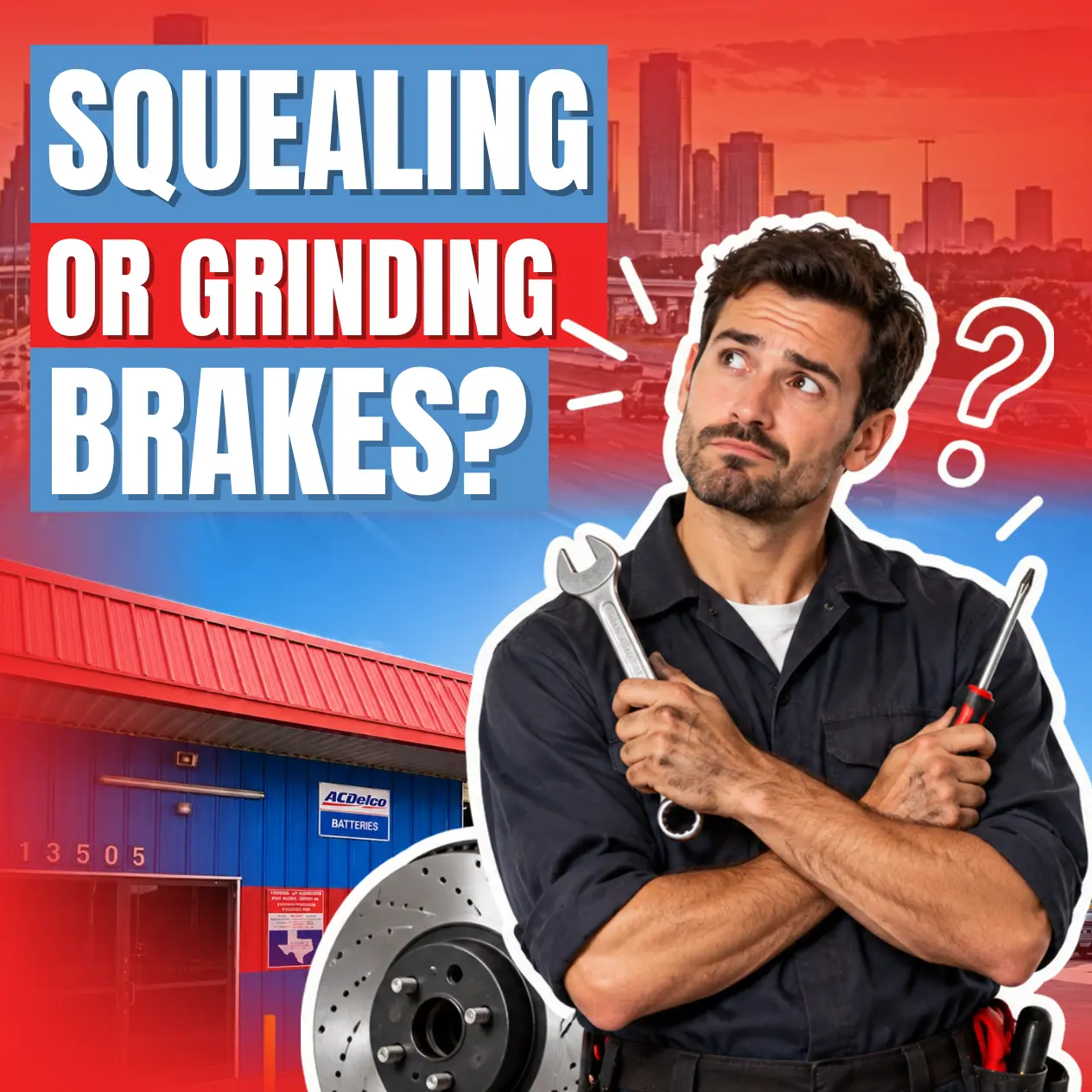
Squealing or Grinding Brakes? What the Noise Is Telling You
Brake noise is your car’s way of talking to you, and the kind of noise matters. Some sounds are harmless and go away on their own. Others mean your brakes are wearing down to metal and your stopping power is at risk. Here’s how to tell the difference.
Squealing: usually a warning, not an emergency
A high-pitched squeal is the most common brake noise. It often has a simple explanation.
Brake pad wear indicators: Most brake pads have a small metal tab built in. When the pad wears down to a certain point, the tab touches the rotor and squeals on purpose. It’s telling you the pads are near the end of their life and it’s time to schedule a replacement.
Morning moisture and surface rust: Houston’s humidity leaves a thin layer of rust on your rotors overnight. The first few stops in the morning may squeal or scrape until the rust wears off. If the noise disappears after a few minutes of driving, this is normal.
Glazed pads or rotors: Hard braking or riding the brakes can overheat the pads and leave a hard, shiny surface that squeals when you stop. Heavy stop-and-go traffic makes this more likely.
Low-quality pads or missing hardware: Budget pads, or brake jobs done without new shims and clips, can vibrate and squeal even when they’re new.
Grinding: get it checked soon
Grinding is a lower, harsher sound, often felt through the pedal. It’s more serious than squealing.
Pads worn down to metal. If the pad material is gone, the metal backing plate grinds directly against the rotor. This damages the rotor quickly and reduces braking power. A pad replacement can become a pad and rotor job, or worse, if you keep driving on it.
Debris caught in the brake. A small rock or piece of road debris can get stuck between the rotor and the dust shield and grind as the wheel turns.
A seized caliper or stuck pad. If a caliper doesn’t release, the pad drags against the rotor. You may notice grinding, a burning smell, heat from one wheel, or the car pulling to one side.
Other brake noises worth knowing
- Clicking when you press or release the brakes: can mean loose pads or missing hardware.
- A pulsing pedal or shaking steering wheel when braking: often points to uneven rotors.
- A clunk when you first brake: can come from loose caliper hardware or worn suspension parts.
When to stop driving
Schedule service soon if you hear a steady squeal that doesn’t go away after the first few stops. Get it checked right away if you hear grinding, smell burning, feel the car pull, or feel the pedal change. Brakes are the one system where waiting doesn’t just cost more money. It costs stopping distance.
Why Houston is hard on brakes
Stop-and-go traffic on the Beltway, Westheimer, and I-10 means your brakes do far more work per mile than they would on open highway. Add heat and humidity, and brake parts wear faster and corrode more easily here than in drier climates.
Get your brakes checked in West Houston
If your brakes are squealing or grinding, the team at West End Auto Works will inspect your pads, rotors, calipers, and hardware and tell you exactly what’s causing the noise and what needs fixing, and what doesn’t.